

Exercise in pregnancy, PMS and menopause: a gynecologist's view
Gynecologist Dr. Amanda Valentim explains on EGRCast what is myth and what is safe about exercise during pregnancy, PMS and menopause.

Pregnant women can and should exercise, except in specific clinical conditions assessed by their obstetrician, according to gynecologist Dr. Amanda Valentim, guest on the third episode of EGRCast, the podcast of EGR GYM in Carpina, Pernambuco (Brazil). She explains that physical activity during pregnancy brings benefits such as preventing preterm birth, preeclampsia and gestational diabetes, and that regular exercise also helps control PMS and menopause symptoms.
Watch the full episode on YouTube.
The third episode of EGRCast took a practical look at women's health. The guest was gynecologist Dr. Amanda Valentim, who talked with host Valdênia Vasconcelos about exercise during pregnancy and after childbirth, gynecological care at every stage of life, and the benefits of physical activity for symptoms such as those of PMS and menopause.
Born in Paudalho and educated in Carpina throughout her school years, Dr. Amanda says she always wanted to be a doctor. A graduate of Faculdade Pernambucana de Saúde, with training at IMIP, she fell in love with women's health while still in medical school, studying how the mother's body adapts during pregnancy. She completed a residency in obstetrics and gynecology and has dedicated 13 years to women's health. The guidance below is for information only and does not replace an individual medical consultation.
Can you exercise during pregnancy?
According to Dr. Amanda Valentim, the idea that pregnant women shouldn't move is a myth. She explains that, except in specific clinical conditions, such as cervical insufficiency, which must be assessed by the obstetrician, physical activity is more than recommended during pregnancy. Among the benefits she mentions are the prevention of preterm birth, obesity, preeclampsia, gestational diabetes and fetal growth restriction.
Precautions when exercising during pregnancy
Her recommendations are:
- wear comfortable clothing and footwear;
- choose activities adapted to the stage of pregnancy, since the center of gravity shifts and the risk of falling increases;
- avoid exercises with a higher risk of falling, such as jumps, and those that greatly increase intra-abdominal pressure, since the abdominal wall is more sensitive at this stage.
Another myth she mentions is that pregnant women can't squat: according to the doctor, there is no restriction on squatting itself, only on higher-risk exercises. As for the postpartum period, she advises against using belly binders as a substitute for getting back to physical activity, and recommends returning to training as soon as the doctor gives the go-ahead.
When should you see a gynecologist? Care at every stage
Dr. Amanda points out that a gynecologist follows a woman throughout her life. Care usually begins with the first period, to assess development and the cycle, and continues with routine checkups once she becomes sexually active. These visits allow early detection of diseases such as cervical cancer and breast cancer, as well as changes in flow and menstrual pain.
She stresses that frequent pain or discomfort during menstruation is not normal, and that family planning is also part of the consultation, since motherhood should be an autonomous decision. In perimenopause, from age 40 onward, changes in mood and libido, loss of strength, lack of energy and hot flashes also deserve medical attention: women don't have to suffer alone.
What are the benefits of exercise for PMS, endometriosis and menopause?
Beyond the cardiovascular and mental health gains from the release of endorphins, the gynecologist highlights benefits specific to women:
- Endometriosis: relief from pain and discomfort;
- PMS: significant symptom control with regular exercise, whether weight training or another activity the woman enjoys;
- Climacteric and perimenopause: fewer hot flashes and less emotional instability;
- Postmenopause: after 40, women begin to lose muscle mass, and strength training is essential for quality of life and bone mass.
She also links quadriceps strength to longevity: people with strong legs tend to live longer.
Can women with incontinence, diastasis or endometriosis train?
Urinary incontinence, abdominal diastasis, genital prolapse, endometriosis and osteoporosis are among the conditions that, according to Dr. Amanda, can benefit from exercise but can also get worse with the wrong exercise. Her advice is to see a doctor for an assessment first and then find a good physical education professional for an individualized plan, because what works for your friend may not work for you.
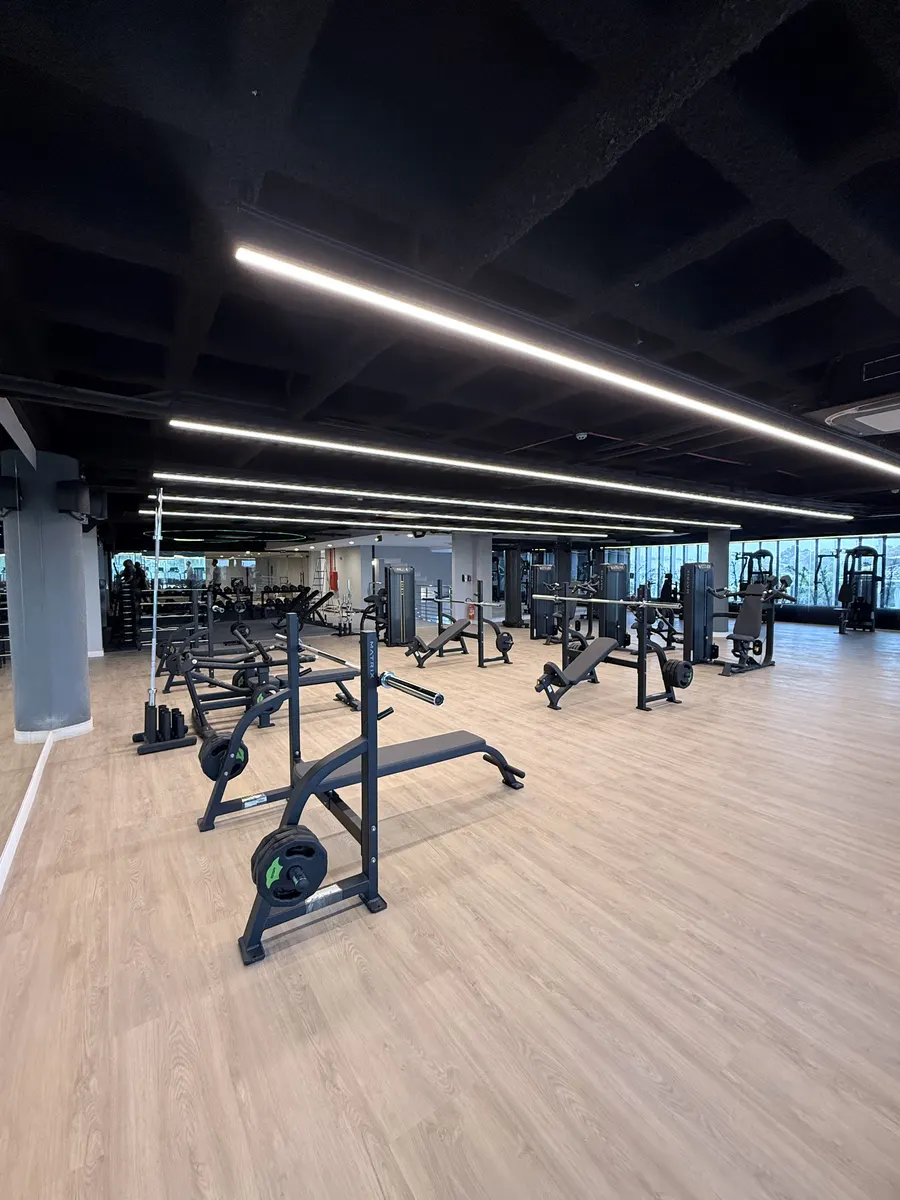
Asked how a gym can help, she pointed to a welcoming environment where women feel comfortable, and to professionals with an eye for women's health. According to the doctor, many patients say they feel self-conscious when they arrive at the gym.
How do you start training and stay consistent?
In closing, Dr. Amanda shared her own experience: she once weighed 130 kg and lost weight slowly and gradually. For her, getting started is an act of self-love, and women are often the driving force for change in the whole family. Her advice is not to wait for the perfect setup: make use of the 15 or 30 minutes you have, go in whatever clothes you have and, above all, stay consistent. She described her strategy of keeping a bag with workout clothes in the car so she can train whenever her schedule allows.
The doctor also noted that the muscle strength built today is what will ensure independence at 70 or 80, such as getting up from a chair on your own or doing your own shopping.
Explore the EGR GYM training programs and, to help you stay consistent, check out the episode on exercise and mental health with psychologist Douglas Oliveira.
To visit EGR GYM, located at Av. Pres. Getúlio Vargas, 923 (Rua dos Tamarindos), Santa Cruz, Carpina - PE, sign up online or chat with our team on WhatsApp. All other episodes are available on the EGRCast page.
Frequently asked questions
Can pregnant women exercise?
Yes. According to gynecologist Dr. Amanda Valentim, physical activity is more than recommended during pregnancy, except in specific clinical conditions, such as cervical insufficiency, which must be assessed by the obstetrician.
Can pregnant women do squats?
According to Dr. Amanda, there is no restriction on squatting itself. What should be avoided are exercises with a higher risk of falling, such as jumps, and those that greatly increase intra-abdominal pressure.
When can you return to training after giving birth?
The doctor's advice is to return to physical activity as soon as your doctor gives the go-ahead, rather than using belly binders as a substitute for getting back to exercise.
Does exercise help with PMS and menopause?
According to the gynecologist, regular exercise helps control PMS symptoms and, during the climacteric, hot flashes and emotional instability. After 40, strength training is essential to preserve muscle mass and bone mass.
Can women with a gynecological condition train?
Conditions such as urinary incontinence, diastasis and genital prolapse can benefit from exercise but can also get worse with the wrong exercise, and patients with endometriosis may not tolerate some types of exercise. Dr. Amanda recommends getting a medical assessment first and then following an individualized plan with a physical education professional.


