









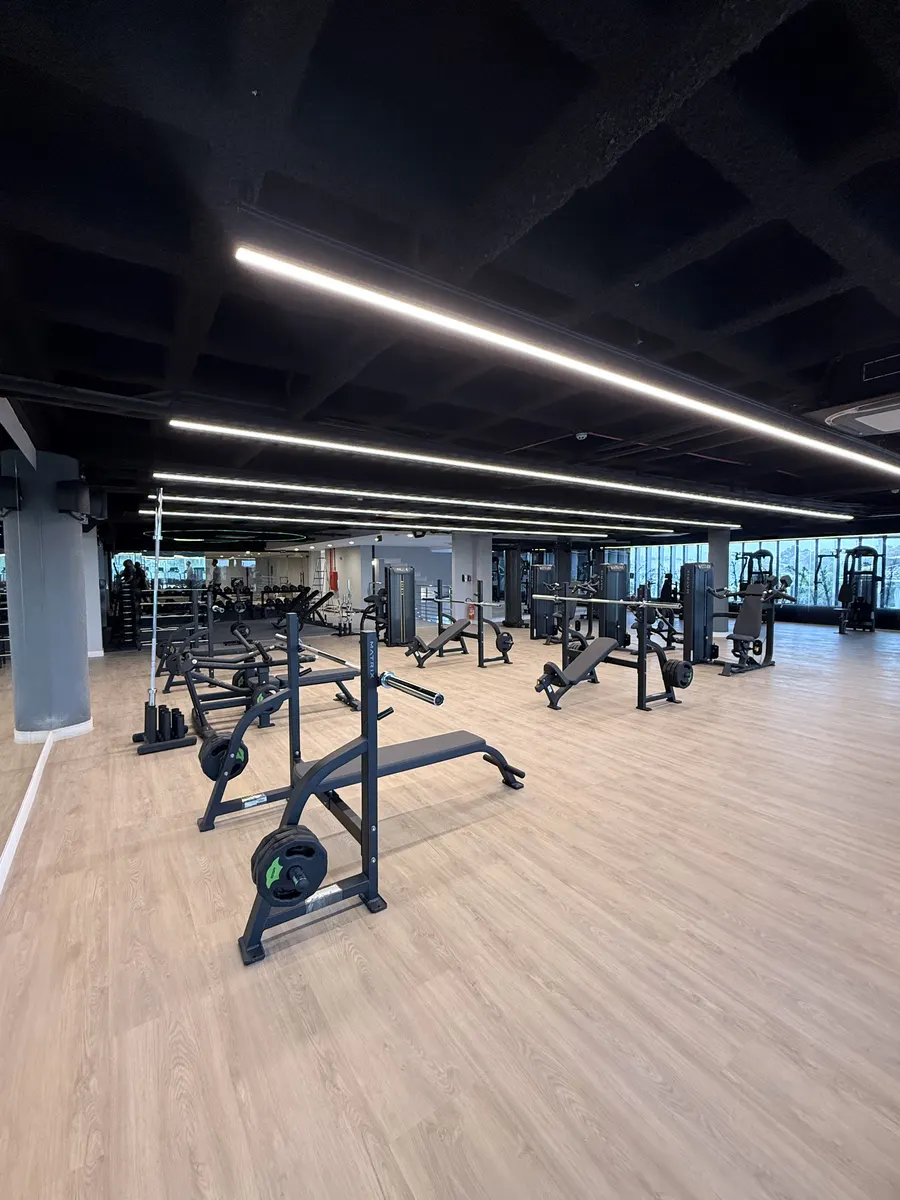

Nutrition and training: tips from nutritionist Carolina Amorim
Nutritionist Carolina Amorim shows on EGRCast how a balanced diet boosts your training, with tips for busy routines and on supplements.

For people who train, the best diet is their usual diet, balanced and adjusted to their schedule, type of training and daily routine, according to nutritionist Carolina Amorim, guest on the sixth episode of EGRCast, the podcast of EGR GYM in Carpina, Pernambuco (Brazil). She recommends balancing your diet rather than cutting out foods without guidance, and using supplements only on an individualized basis, with support from a nutritionist.
Watch the full episode on YouTube.
Food is a great ally for your routine, your training and your health, and it doesn't have to mean restriction. That was the topic of the sixth episode of EGRCast, which welcomed nutritionist Carolina Amorim to talk about dietary balance, nutrition at every stage of life, planning for people short on time and the use of supplements.
Carolina says that as a child she loved playing pretend cooking and restaurant. As a teenager, when she met a nutritionist, she discovered a profession that combined two passions: caring for people and food. She earned her degree in Nutrition from a federal university. Here are the key points from her conversation with host Valdênia Vasconcelos.
Does eating well mean cutting out everything you love?
Nutritionist Carolina Amorim compares the body to a car: just as you look for the best fuel so the vehicle performs well, your diet should provide the best for your health and vitality. She stresses, however, that "the best" is individual and must respect each person's routine and reality. That's why she urges caution with the idea of cutting out foods without guidance. The goal, in her words, is to balance your diet.
What should people who train eat?
According to Carolina, the diet of someone who exercises is simply their usual diet, adjusted to their schedule, type of training and routine. For those who train at higher intensity, the nutritionist makes more specific calculations and recommendations and, when necessary, may add some supplementation. The secret, in her view, is a balanced diet.
She also notes that nutrition is no longer associated only with weight loss and now covers the entire life cycle: from preconception to pregnancy, from the postpartum period and breastfeeding to a child's introduction to solid foods, through adolescence, a stage that calls for attention to prevent eating disorders, all the way to adulthood and aging. That's why she believes everyone should have at least one nutrition consultation in their lifetime.
For people with diabetes, high blood pressure or high cholesterol, there are specific recommendations, and the diet must be individualized. She gives the example of diabetes: it's not just about cutting sugar, but about balancing carbohydrates in the diet.
How can you eat well when you're short on time?
For people with a hectic routine, Carolina Amorim suggests three practical habits:
- Know what you have at home: open the fridge and cupboards before shopping or cooking. Disorganization, she says, leads to eating whatever is at hand and letting products expire.
- Use a shopping list and set a date: she keeps an up-to-date list and prefers to shop after the 10th of each month, when supermarkets are less crowded, so she can shop efficiently.
- Get meal prep done once a week: she uses Sundays to season proteins and have beans, rice and root vegetables ready. Packed meals are a great option, but simply having part of the cooking done ahead already helps a lot.
In her estimate, these three steps alone go a long way toward a more balanced eating routine.
Do people who train need supplements?
Carolina explains that supplementing means complementing something that is missing. With the wide range of products available, such as whey protein, creatine, vitamins B12 and D, and magnesium, many patients arrive at her office with a ready-made list, without knowing what actually works for them. The basic rule, she says, is to see a nutritionist, who will analyze your diet and lab tests to identify what your diet isn't providing.
Even supplements with a high level of scientific evidence require individualized dosage, timing and goals. She warns that, when misused, a supplement can do harm instead of helping.
What are the four pillars of quality of life?
For those lacking motivation, the nutritionist uses the image of a chair with four legs: diet, physical activity, quality sleep and mental health care. Starting with diet, she says, is a great way in, because one change leads to another. Her suggestion is to choose a single goal, such as drinking more water, getting off screens earlier or cutting back on soda or sugar, and progress gradually. She also points out that places for physical activity, such as the gym, help keep motivation up.
Explore the EGR GYM training programs and, on another pillar the nutritionist mentioned, read the episode on exercise and mental health with psychologist Douglas Oliveira.
To visit EGR GYM, located at Av. Pres. Getúlio Vargas, 923 (Rua dos Tamarindos), Santa Cruz, Carpina - PE, sign up online or chat with our team on WhatsApp. All other episodes are available on the EGRCast page.
Frequently asked questions
What is the best diet for people who train?
According to nutritionist Carolina Amorim, it's your usual diet, balanced and adjusted to your schedule, type of training and routine. People who train at higher intensity may need more specific calculations and recommendations from a nutritionist.
Do I need to take supplements to train?
According to the nutritionist, supplementing means complementing what your diet doesn't provide. The recommendation should come from a nutritionist, after analyzing your diet and lab tests, with individualized dosage, timing and goals.
How can you eat well when you're short on time?
Carolina Amorim suggests three habits: know what you already have at home, use a shopping list with a set date for supermarket trips, and get meal prep done once a week.
Do people with diabetes need to cut out all sugar?
According to the nutritionist, it's not just about cutting sugar, but about balancing carbohydrates in the diet, with an individualized eating plan.
Does EGR GYM in Carpina have a nutritionist?
Yes. EGR GYM, in Carpina, Pernambuco, has a nutritionist for strategic, sustainable eating, as part of the support that begins with the Quality of Life Assessment.


